Recipe
Serves
4 1×
Serves 4Prep 15 minCook 55 minTotal 1H10 min
Ingredients
Method
- Heat the oven to 200C conventional or 180C fan. Toss the squash with 1 tbsp oil, salt and pepper on a roasting tray.
- Roast the squash for 25 minutes until caramelised at the edges, then set aside.
- Meanwhile, heat the remaining oil in a large ovenproof pan or casserole over medium heat. Cook the onion and celery for 8 minutes until soft.
- Add the garlic and barley and stir for 1 minute to coat.
- Pour in the hot stock, add half the sage and bring to a simmer.
- Cover and transfer to the oven for 25 minutes until the barley is tender and the stock is absorbed.
- Fold in the roasted squash, lemon juice and remaining sage. Season well.
- Scatter over the toasted hazelnuts and grate over the cheese before serving.
Roast Squash and Pearl Barley Pilaf
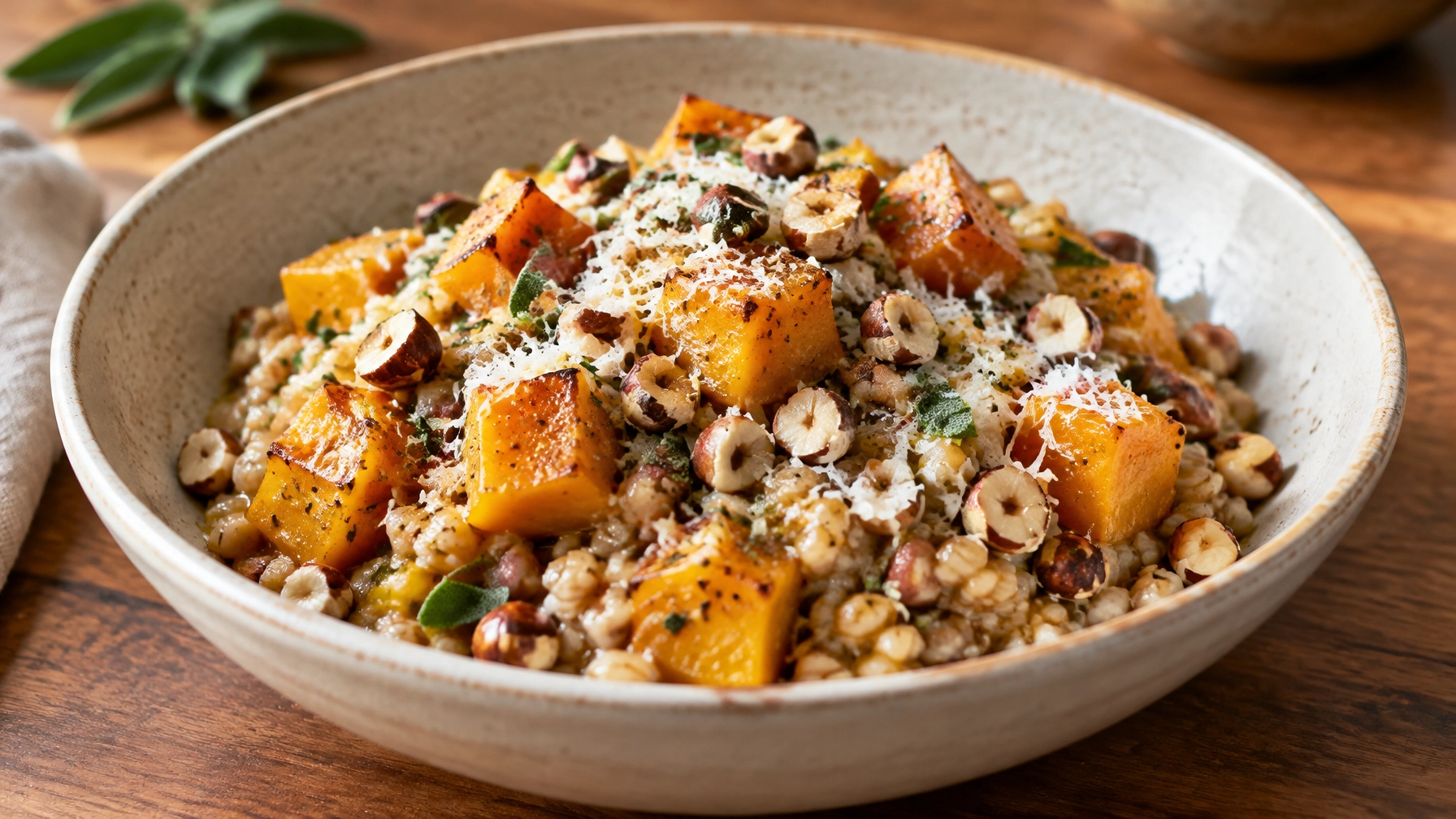
Roast squash and pearl barley pilaf cooks the barley directly in stock with roasted squash, so the grains drink up the sweet vegetable flavour.
Fresh sage and toasted hazelnuts finish it.
One pan, no draining, and it eats well hot or packed cold for lunch.
Recipe
Servings: 4
Prep time: 15 minutes
Cook time: 55 minutes
Total time: 1 hour 10 minutes
Tips
- Roasting the squash separately keeps its texture; adding it raw makes it dissolve.
- Pearl barley needs plenty of liquid and a good 25 to 30 minutes, so keep the stock hot.
- Toast the hazelnuts in a dry pan for 3 minutes until fragrant.
The two-stage cooking is important to the finished texture. The squash roasts on its own first, while the barley cooks in the stock in an ovenproof pan. Keeping them separate until the final fold-in lets the squash retain its shape instead of breaking down into the barley.
Have the stock hot before adding it to the pan. The barley cooks directly in the liquid, which it absorbs as it softens. The recipe does not call for draining, so there is no separate pot of barley water to discard. Once the pan has been covered and baked, check that the grains are tender and the stock has been absorbed before combining the barley with the squash.
The onion and celery are cooked until soft before the barley and garlic go in. Stirring the barley for a minute coats it with the oil and the softened vegetables. Add the stock and sage only after this brief stir, then bring the mixture to a simmer before covering the pan for the oven.
Variations
- Swap hazelnuts for toasted pumpkin seeds to make it nut-free.
- Add crumbled goat cheese instead of the hard cheese.
- Stir through kale ribbons in the last 10 minutes of baking.
The pumpkin seeds keep a toasted topping in the dish while avoiding hazelnuts. For the cheese variation, use crumbled goat cheese in place of the Parmesan or vegetarian hard cheese. To include kale, stir the ribbons through during the last 10 minutes of baking, as specified.
The core method stays the same for each variation: roast the squash separately, cook the barley in the covered pan, then fold the squash in at the end. The sage and lemon juice remain part of the recipe, giving the pilaf its herb and citrus finish alongside whichever topping or addition you choose.
FAQ
Can I make it in advance?
Yes, it keeps 3 days refrigerated and reheats with a splash of water. The recipe can be made ahead for a later meal or lunch. Add the splash of water when reheating, then serve it hot or pack it cold for lunch.
Is it vegan?
Make it so by serving without the cheese or using a vegan alternative. The listed cheese is added before serving, so it can be left off or replaced without changing the barley and squash method.
Can I use a different grain?
Farro or spelt work with the same method; cooking time may vary slightly. Keep in mind that the recipe’s stated timings are for pearl barley. Check the grain as it cooks and allow for the difference in cooking time.
Can I cook it entirely on the hob?
Yes, simmer covered for 30 minutes over low heat instead of baking. Follow the method through adding the stock and sage, then keep the pan covered on the hob. Fold in the roasted squash, lemon juice and remaining sage once the barley is tender and the stock has been absorbed.