Recipe
Servings
Servings 1×
Ingredients
- White beans
- Beans
- Onion
- Cream
- Chorizo
- Salt
Method
- Serve it as a comforting weeknight main, or make it ahead and let the flavors become even friendlier overnight.
- Start with properly hydrated beans.
- Drain and rinse the soaked beans before they go into the pot.
- Bring everything up to heat gradually, skim the foam if needed, and then lower the temperature firmly.
- Brown the chorizo before the stew settles into its long simmer.
- Use that rendered fat as your flavor carrier.
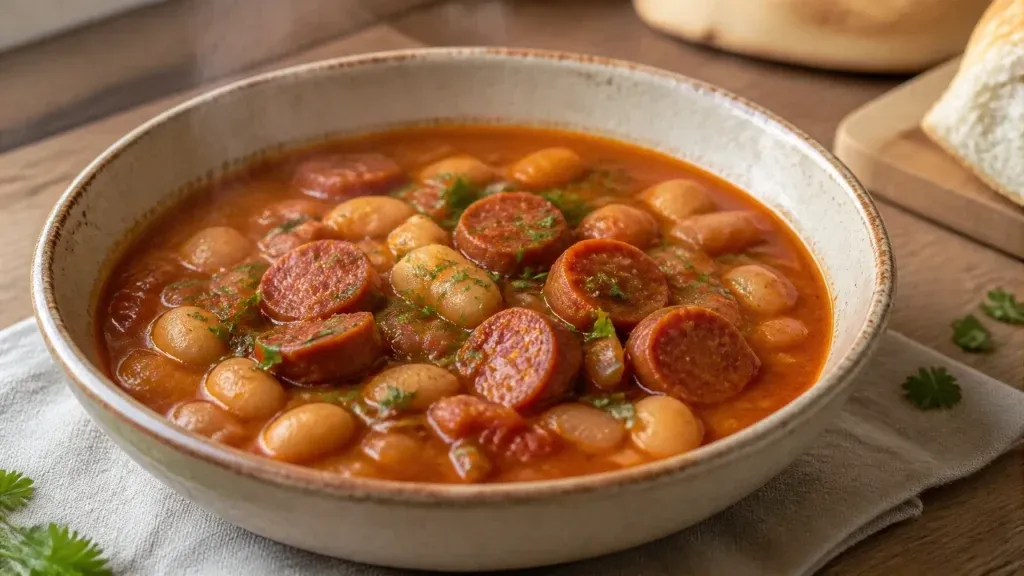
This Spanish chorizo and white bean stew is the sort of dinner that makes a cold evening behave itself. It is rich, smoky, creamy, and built for a single sturdy pot: so you get deep flavor without creating a sink full of evidence. Serve it as a comforting weeknight main, or make it ahead and let the flavors become even friendlier overnight.
If you enjoy low-mess cooking, browse more Cookpedia one-pot meals and keep this recipe in your back pocket for busy nights.
The Science of a Creamy Bean Broth
Start with properly hydrated beans. If you are using dried white beans, soak them in plenty of cold water before cooking. Hydration moves gradually from the outer skin toward the center, which helps the beans cook evenly instead of producing a pot full of tender beans and a few stubborn pebbles.
Drain and rinse the soaked beans before they go into the pot. This clears away excess surface starch and reduces the foamy layer that can appear during the first boil. Bring everything up to heat gradually, skim the foam if needed, and then lower the temperature firmly. The stew should barely bubble.
Do not let it rage like a small, edible volcano. A rolling boil makes the beans knock into each other and against the sides of the pot. That mechanical agitation splits their skins and turns a handsome stew into bean rubble. Gentle heat softens the cell walls while allowing starch to slowly escape into the cooking liquid. That released starch is what gives the broth its naturally creamy body.
Traditional Spanish cooks sometimes interrupt the early boil with a little cold water, a technique known as asustar las judías, or “frightening the beans.” The sudden temperature drop stops vigorous bubbling and helps keep the skins intact. You do not need to perform a dramatic bean exorcism, but controlling the boil is non-negotiable.
Build Flavor in Layers, Not All at Once
Brown the chorizo before the stew settles into its long simmer. As it heats, the sausage releases seasoned fat, and the surface develops browned flavors through the Maillard reaction. Those savory, roasted notes give the finished dish far more depth than simply dropping the chorizo into liquid.
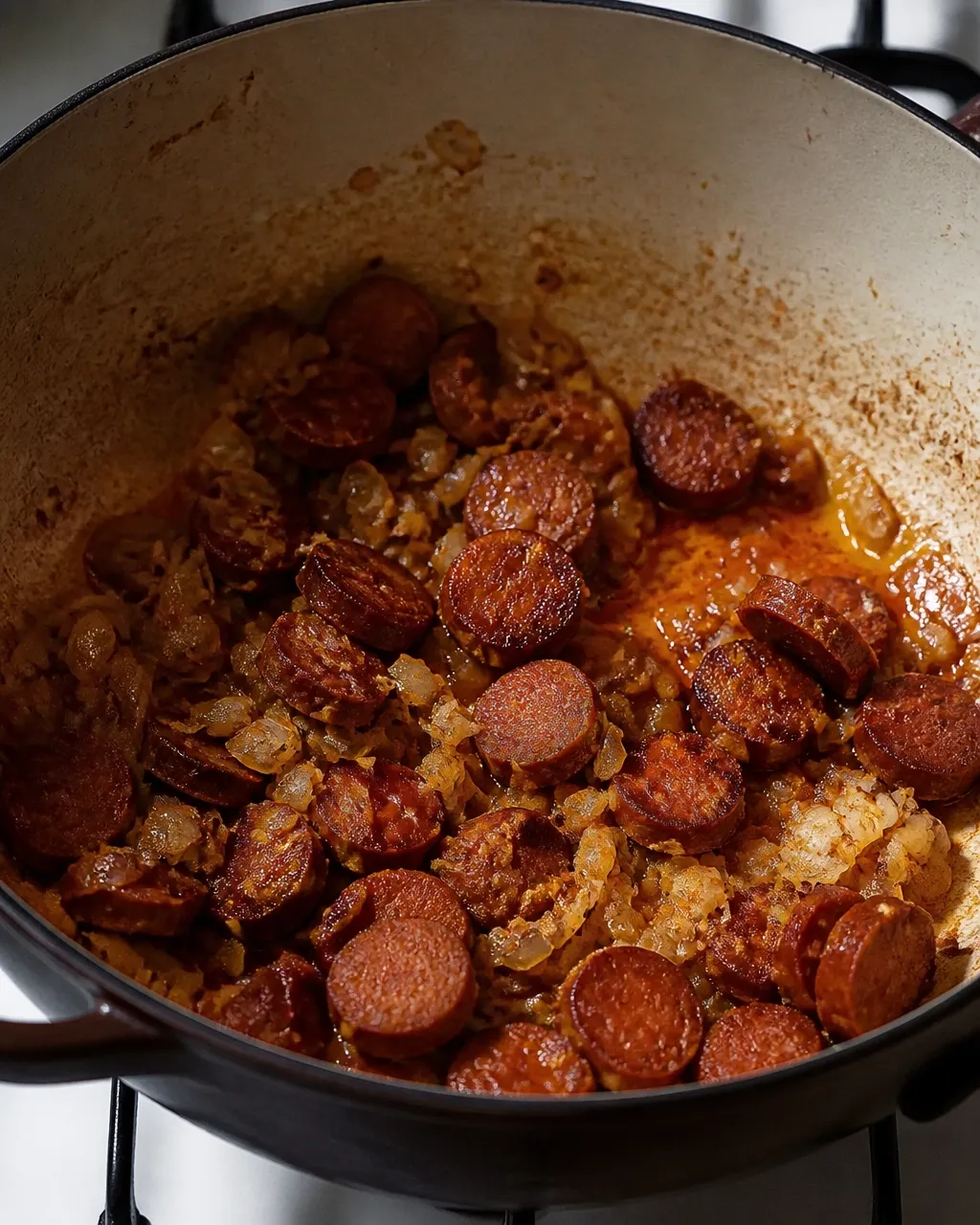
Use that rendered fat as your flavor carrier. Soften the onion and other aromatics slowly until they become sweet and fragrant. Keep the heat moderate; you want softness and sweetness, not dark, bitter edges.
Add smoked paprika with care. Its pigments and aromatic compounds disperse especially well in warm fat, which is why blooming the spice creates such a vivid color and rounded flavor. However, paprika scorches quickly when left in a hot, dry pan. Take the pan briefly off the heat, stir in the paprika, and add liquid promptly. This small pause protects the spice from burning and keeps the broth smoky rather than harsh.
For a classic Spanish direction, choose sweet smoked paprika and add heat separately if you want it. Chorizo already brings salt, fat, smoke, and spice, so taste before adding more seasoning. The stew should taste generous, not like it has been mugged by a salt shaker.
Protect the Beans While the Stew Thickens
Once the beans are tender and the smoky base is ready, combine everything gently. Shake the pot by its handles or use a careful folding motion instead of stirring aggressively. The goal is to distribute the sofrito and chorizo without smashing the beans.
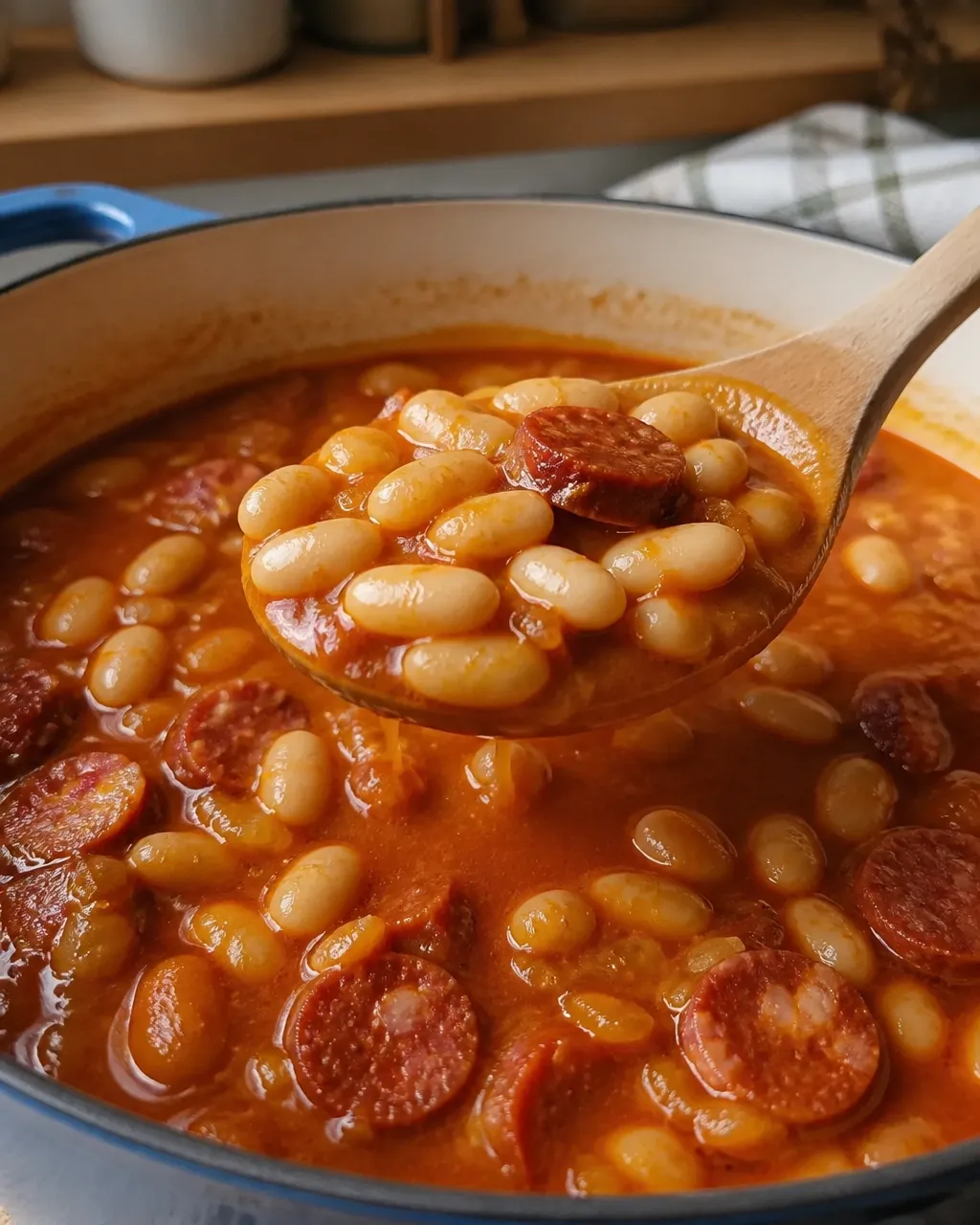
For an especially silky broth, mash or purée a small portion of the cooked beans and vegetables, then return them to the pot. This thickens the stew without flour, cream, or other distractions. Bean starch does the heavy lifting, as it should.
Finish with enough resting time to let the broth settle. As the pot cools slightly, starches continue to hydrate and the flavors meld. The stew may look a little looser while piping hot and thicken as it rests, so avoid reducing it aggressively at the last second. Leave room for the beans to do their quiet chemistry.
Variations for Different Tables
Use canned white beans when time is tight. They are already cooked, so focus on building the chorizo, aromatics, and paprika base first. Add the beans later and simmer just long enough for them to absorb the smoky broth. Stir gently because canned beans are softer and more delicate.
Make the stew greener with chopped kale, Swiss chard, or spinach. Add sturdy greens early enough to soften, but fold in tender spinach near the end so it stays fresh and bright. The bitterness of greens also balances the richness of the sausage.
For a lighter version, reduce the amount of chorizo and increase the beans and vegetables. You will lose some rendered fat, so compensate with a little olive oil while building the aromatic base. Add roasted red peppers for sweetness, or use a pinch of hot smoked paprika for heat without adding another sausage.
Need a vegetarian variation? Replace the chorizo with smoked paprika, garlic, roasted peppers, and a small amount of olive oil. Add a spoonful of tomato paste for savory depth. It will not taste exactly like the original, but it will still deliver a satisfying, smoky bean stew.
Side Dishes That Cut Through the Richness
Pair this stew with something crisp and acidic. A simple green salad dressed with lemon or sherry vinegar provides a clean contrast to the creamy beans and oily chorizo. Add sliced radishes or shaved fennel for extra crunch.
Serve crusty bread if you are willing to mop the bowl properly. A rustic sourdough works particularly well because its tanginess keeps the meal from feeling too heavy.
For more vegetables, roast broccolini, cabbage wedges, or peppers alongside the stew. Keep the seasoning simple. The pot already contains plenty of personality; the side dish should bring freshness, not start a competing speech.
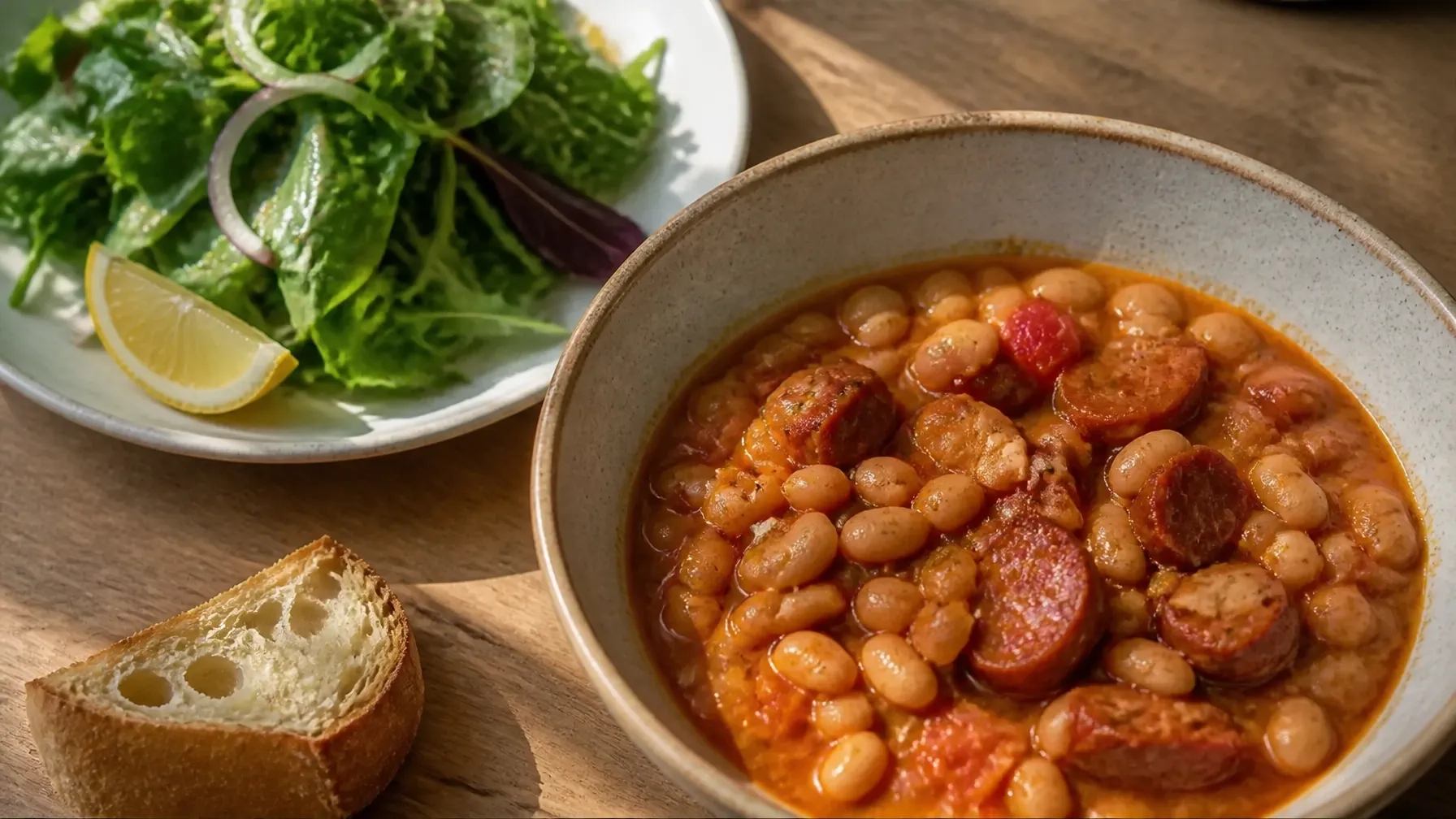
This is also an excellent companion to other quick meals from Cookpedia, especially when you want a filling dinner that does not require elaborate plating.
Frequently Asked Questions
Can I use canned beans instead of dried beans?
Yes. Use drained and rinsed canned white beans, then shorten the cooking time substantially. Canned beans need time to absorb flavor, not time to become tender. Keep the simmer gentle and check them often. If they begin to split, stop cooking and let the stew rest off the heat.
Why are my beans still hard?
Check the age of the beans first. Older dried beans can take much longer to soften because their skins and cell walls become less receptive to water during storage. Hard water can also slow softening. Most importantly, avoid adding acidic ingredients too early; tomato, wine, and vinegar can delay the breakdown of pectin in the bean walls. Add acidic finishing ingredients after the beans are tender.
What if the stew is too salty?
Dilute it gradually with unsalted water or stock. You can also add more unsalted beans or vegetables if the pot has room. Avoid relying on a whole potato to “absorb” the salt; it absorbs salty liquid, but it does not selectively remove sodium. Taste again after the stew rests, because flavors often seem less sharp once the broth cools slightly.
What if the broth is too thin?
Remove the lid and let the stew simmer gently so excess water can evaporate. Do not crank the heat to maximum, or the beans may break before the broth thickens. For a faster fix, mash a small portion of beans against the side of the pot and fold them back in. Their starch will thicken the liquid naturally.
What if the broth is too thick?
Add warm water or unsalted stock a little at a time. Stir or swirl carefully until the stew reaches a spoonable consistency. Remember that bean starch continues to thicken the broth as it cools, so make it slightly looser than your final target if you are serving it later.
Can I make this stew ahead of time?
Absolutely. This is one of those dinners that improves after a rest because the paprika, aromatics, chorizo, and beans have more time to mingle. Cool it promptly, divide it into shallow containers, and refrigerate it within two hours. The USDA’s leftover guidance recommends using refrigerated leftovers within three to four days.
How should I reheat it safely?
Reheat the stew until it reaches 165°F throughout. For soup-like dishes, bring it to a rolling boil, stirring carefully so the bottom does not catch. Add a splash of water or stock if the broth has tightened in the refrigerator. Use low to medium heat after it reaches temperature to protect the beans from breaking apart.
Can I freeze Spanish chorizo and white bean stew?
Yes. Cool it completely, portion it into airtight containers, and leave a little space for expansion. The beans may soften slightly after freezing and reheating, but the stew remains very suitable for batch cooking. Thaw it in the refrigerator when possible, then reheat gently and adjust the consistency with water or stock.
Is Spanish chorizo the same as fresh Mexican chorizo?
No. Spanish chorizo is usually cured or semi-cured and has a firm texture with a pronounced paprika flavor. Mexican chorizo is generally fresh, softer, and more heavily seasoned. You can substitute it, but cook it thoroughly and expect a looser, more intensely spiced result. Remove excess fat if the stew becomes greasy, then brighten it with a little acidity at the end.