Recipe
Servings
Servings 1×
Ingredients
- Salmon
- Asparagus
- Garlic
- Lemon
- Cooking oil
Method
- Arrange the food with breathing room.
- Give the salmon a clear patch of pan so heat can circulate around it.
- Pat the salmon dry, then coat it lightly with oil and the lemon-herb mixture.
- Use lemon zest as well as juice when you want maximum citrus flavor.
- Add a fresh squeeze after baking for a sharper finish.
- Use lemon as a finishing tool rather than turning the salmon into a long marinade.
When dinner needs to be healthy, satisfying, and on the table without a kitchen marathon, reach for salmon and asparagus. This lemon herb baked salmon with roasted asparagus brings together rich, tender fish, crisp-edged vegetables, bright citrus, and plenty of fresh flavor in one simple meal. It is the sort of dinner that looks thoughtful but behaves like a weeknight hero, quietly efficient and thankfully low on washing up.
Tips & Technique: Make Heat Do the Work
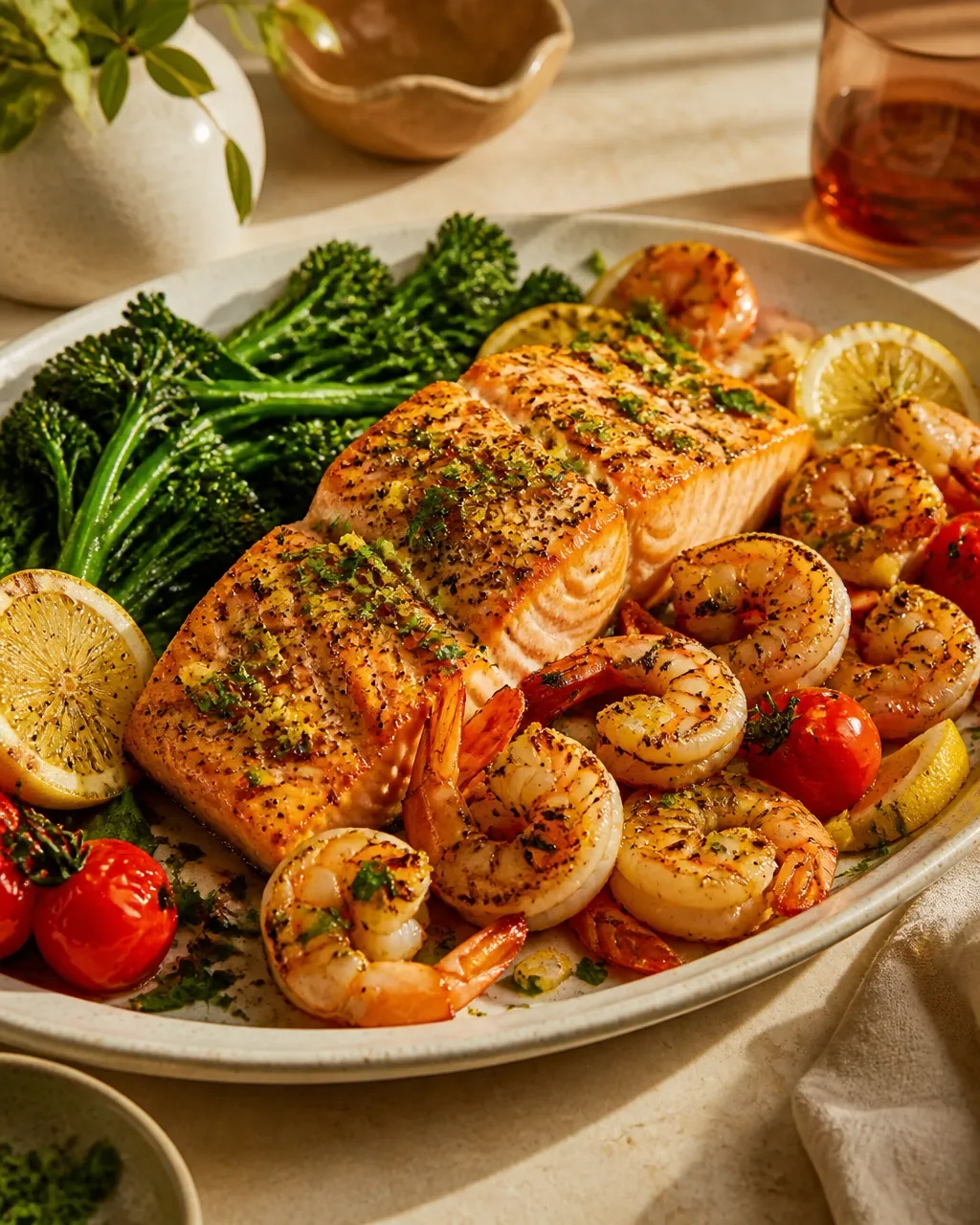
Use one oven temperature for two different textures
Set the oven to around 400°F (200°C). This temperature is hot enough to encourage browning on the asparagus without being so fierce that the salmon dries out before the center cooks.
Think of the sheet pan as a small cooking laboratory. The salmon needs gentle, even heat to keep its muscle fibers tender. The asparagus needs dry, concentrated heat to soften its cell walls and brown its tips. A moderately hot oven gives both ingredients what they want.
Arrange the food with breathing room. Crowding traps steam, and steam is excellent for softening vegetables but poor at creating roasted edges. Leave space between the asparagus spears and avoid piling them over one another. Give the salmon a clear patch of pan so heat can circulate around it.
Pat the salmon dry for better flavor
Do not skip this tiny bit of preparation. Surface moisture must evaporate before browning can begin. If the salmon is wet, the oven spends its early energy boiling that moisture away. The fish will still cook, but the top may stay pale and the herbs may slide around like they have somewhere better to be.
Pat the salmon dry, then coat it lightly with oil and the lemon-herb mixture. Oil helps transfer heat across the surface and carries fat-soluble aromas from herbs and garlic. It also helps prevent the delicate top from becoming chalky.
Use lemon zest as well as juice when you want maximum citrus flavor. Zest contains aromatic oils that bloom beautifully in the oven, while lemon juice contributes acidity. Add a fresh squeeze after baking for a sharper finish.
Keep lemon balanced, not bossy
Acid is powerful. Lemon brightens rich salmon by stimulating saliva and making the dish taste lighter, but too much juice can dominate the fish. It can also slightly tighten the surface proteins if left soaking for a long time.
Use lemon as a finishing tool rather than turning the salmon into a long marinade. Add enough to lift the flavor, then taste the finished plate before adding more. You are aiming for freshness, not a citrus ambush.
Fresh dill and parsley work especially well because they bring green, grassy aromas without adding heaviness. Garlic contributes savory depth, while olive oil rounds everything out. This is minimalist flavor at its most useful: a few high-impact ingredients doing actual work.
Roast asparagus according to its thickness
Thin asparagus cooks quickly and can become limp before the salmon is ready. Thick spears take longer to soften and benefit from a little extra time in the oven. Choose spears of similar thickness when possible so the tray finishes evenly.
Look for bright green color, lightly browned tips, and a stalk that yields when pierced but does not collapse. That crisp-tender point is the sweet spot. Heat breaks down the vegetable’s structural fibers, but excessive heat exposure continues pushing the texture toward mush.
Trim or snap away the woody ends before roasting. The lower stalk contains more tough fiber, and no amount of positive thinking will turn it into a tender bite.
Check temperature instead of guessing
Use an instant-read thermometer in the thickest part of the salmon. The USDA recommends cooking fish to 145°F (63°C), or until the flesh is no longer translucent and flakes easily. A thermometer is more reliable than color because salmon varies naturally in shade, and oven temperatures are not always as trustworthy as their displays suggest.
Remove the pan carefully and allow the salmon to rest briefly. Carryover heat can continue cooking the center after the pan leaves the oven, while resting allows the juices to settle rather than rushing onto the plate. Do not rely on carryover cooking to replace the recommended safe temperature; use it to protect texture after the fish is properly cooked.
If white beads appear on the surface, that is albumin, a harmless protein pushed out by heat. A little is normal. Large amounts usually signal that the fish has been cooked too hot or too long. The fix is simple: check earlier and trust the thermometer.
For more efficient weeknight inspiration, browse Cookpedia’s 30-minute dinner recipes and healthy recipes. Both are useful when your schedule is busy but your standards remain annoyingly high, in the best possible way.
Variations: Keep the Structure, Change the Mood
Keep the same cooking method and change the flavor direction.
For a Mediterranean version, lean into oregano, parsley, garlic, and a little crumbled feta at the table. Add a few sliced olives for salty contrast, but go easy on extra salt because olives and feta bring plenty.
For a creamy finish, serve the salmon with a spoonful of plain Greek yogurt mixed with lemon zest, dill, and black pepper. The cool sauce creates contrast against the warm fish and adds tang without requiring a heavy cream sauce.
For a smoky version, use smoked paprika with the herbs and finish with a squeeze of lemon. Smoked paprika adds depth quickly, which makes it excellent for rushed evenings.
For a gentle spicy version, add red pepper flakes or a small pinch of cayenne to the herb coating. Pair the heat with extra lemon or a yogurt sauce so the dish stays balanced rather than simply louder.
You can also replace asparagus with green beans, broccolini, or zucchini. Match the vegetable to the salmon’s cooking time. Dense vegetables may need a head start, while delicate zucchini may need less time. Keep the pan uncrowded and let texture guide you.
If you are collecting healthy dinner ideas, save this flavor formula: rich protein plus roasted vegetable plus acid plus fresh herbs. It is flexible enough to rescue many nearly empty refrigerators.
Side Dish Pairings: Add Contrast, Not Competition
Serve this salmon with a side that supports its richness rather than repeating it.
A simple arugula salad works beautifully. Its peppery bite cuts through the salmon’s natural richness, while a lemony dressing echoes the main dish without making everything taste identical. Cookpedia’s arugula power salad collection is a good place to find a fresh companion.
Add quinoa, brown rice, or a small portion of roasted potatoes when you want a more substantial plate. Grains provide a neutral, nutty base that absorbs the lemony juices. Potatoes bring comfort, but keep their seasoning simple so the fish remains the star.
For a lighter pairing, choose a cucumber and herb salad. Cool, crisp vegetables create a temperature and texture contrast against the warm salmon. A spoonful of yogurt or a sharp vinaigrette can provide the acidity needed to keep the meal feeling fresh.
Skip an overly rich side dish. Creamy pasta, buttery gratins, and salmon can become deliciously heavy when placed together. Delicious, yes. Weeknight-light, not especially.
FAQ: What If Dinner Does Not Go Perfectly?
What if my salmon is thicker than the recipe suggests?
Expect thicker salmon to need more time than thin fillets. Do not increase the oven temperature to hurry it along; the outside may dry before the center is ready. Keep the heat moderate and check the thickest section with a thermometer. Thickness, not weight alone, is the most useful predictor of cooking time.
What if the asparagus is done before the salmon?
Remove the asparagus when it reaches crisp-tender and let it rest on a plate while the salmon finishes. Do not leave it in the oven simply because the fish needs extra time. Continued heat breaks down the vegetable’s cell structure and turns fresh roasted asparagus soft and watery.
Return it to the warm pan for a minute before serving if needed. A brief reheat is kinder than overcooking it from the start.
What if my salmon seems dry?
Dryness usually comes from excess cooking, insufficient thickness, or an oven running hotter than expected. Check the fish earlier than you think you need to, especially if the fillets are small. Use a thermometer rather than waiting for dramatic flaking.
A spoonful of yogurt sauce, a little olive oil, or fresh lemon can improve the eating experience, but none can truly reverse overcooked fish. Treat the thermometer as your prevention plan.
What if the top is pale?
A pale top is not a safety problem. It simply means the surface has not browned much. Patting the fish dry before cooking helps, as does leaving it uncovered and avoiding excess liquid.
For more color, use a brief broil at the end, watching continuously. The sugars and proteins on the surface can brown quickly under direct heat. “Just one more minute” is how many dinners become smoke-alarm content.
What if I only have frozen salmon?
Cook frozen salmon safely, but expect a longer cooking time and less even browning. Remove excess ice and moisture from the surface, then season it as well as you can. Start checking the center once the fish has softened enough for the thermometer to enter cleanly.
For the best texture, thaw salmon overnight in the refrigerator. Avoid thawing it on the counter, where the outer surface can warm into an unsafe temperature range while the center remains frozen.
What if I do not like asparagus?
Use another quick-roasting vegetable with a similar cooking time. Broccolini, green beans, zucchini, and thinly sliced bell peppers all work well. Adjust the cooking time based on thickness and water content. Vegetables with more water may brown less, while dense pieces may need extra time.
This flexible approach is one reason sheet-pan dinners belong in your rotation of quick family meals. The method stays constant while the produce changes with the season.
Can I prepare leftovers for lunch?
Yes. Refrigerate leftover salmon and asparagus promptly in a covered container and use them within three to four days. Reheat gently, because high heat can dry the salmon and make the asparagus limp. Flake the cold or gently warmed salmon over greens, grains, or a salad with a bright dressing.
For another fast option, explore Cookpedia’s 15-minute teriyaki beef stir-fry. It uses a different technique, but the same weeknight principle applies: control the heat, avoid crowding, and let a few strong flavors carry the meal. That is the heart of practical air fryer recipes dinner planning too: choose efficient cooking methods, then focus on balance and texture.